I had no idea about how technical interview goes until Google Tech Interviewing Decoded. It was an event when Google just invited some students from local universities for one day and basically did some workshops about how to do technical interview, about to become a Google employee and other stuff. I found a link to that event on our 100W facebook page, applied and got selected to participate. I also got email that I didn't happy to be lucky enough and they didn't schedule me for a mock interview. Well, anyway, I went there.
I arrived a bit earlier than the vent itself, so I met few folks from SJSU and also one old friend from my community college, who transferred to SFSU. Anyway, the first workshop was about technical interview. Two Google guys showed on example how it goes. The interviewer asked interviewee to write a simple method on a board and the guy spent half hour next to white board writing some simple java code, explaining each line of the code, logics behind what he is doing and what is also in his mind about other ways to solve that problem. That was a very import show to me. This is basically the most important part of the technical interview, they said, writing a code on a white board. I wasn't ready for it.
Writing code on a white board is very different than writing it in IDE, even though it doesn't look like a big deal. There is a lot of small details, that can go wrong. No spelling check, no syntax check, you might not have enough space to write on one line what you wanted. You have to constantly speak to the interviewer about what are you doing. You can't write your code silently - it is a very wrong thing to do. The only way you can be silent is if you first told interviewer that you need some time to think on the problem before trying to solve it. All this details are not obvious and I would never knew it without that workshop.
Well, between this and next light talk I had a chance to talk to on of the "googlers" asking why I didn't get a mock interview. The guy said that they have enough room for only 20 mock interview out of 200 students that showed up. I told him that I really want one. He said sorry. But about hour after he told me that some guy didn't show up and that he wrote me down in the opened position, so I was scheduled for a mock interview at Google. Sounds badass.
So, toward the end of this entire event I got a mock interview for half hour. The main part about where the guy is asking me about myself went great. The part with Whiteboard went terrible. Even though I tried to do everything as I just learned during the workshop, it was the first time since 2009 when I was writing code without a keyboard and I wasn't prepared for it. I learned that I need practice.
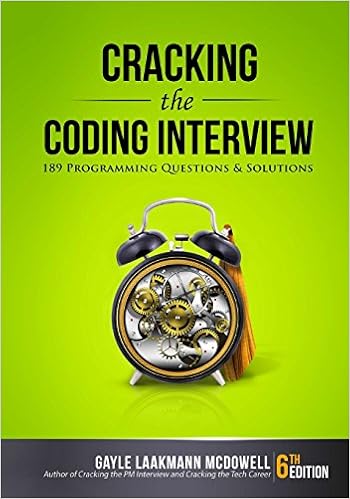
As a part of the event, we had a lottery and thanks to Random I won some extra swag, part of which was a paperback copy of the Cracking the Coding Interview book.

In few weeks after that Google event I had my very first real interview for my very first internship in Bromium. Of course I had a Whiteboard part, which went way better than my previous experience. I was prepared. As a result I got the internship in Bromium, that I will start on June 1. That's all.
I arrived a bit earlier than the vent itself, so I met few folks from SJSU and also one old friend from my community college, who transferred to SFSU. Anyway, the first workshop was about technical interview. Two Google guys showed on example how it goes. The interviewer asked interviewee to write a simple method on a board and the guy spent half hour next to white board writing some simple java code, explaining each line of the code, logics behind what he is doing and what is also in his mind about other ways to solve that problem. That was a very import show to me. This is basically the most important part of the technical interview, they said, writing a code on a white board. I wasn't ready for it.
Writing code on a white board is very different than writing it in IDE, even though it doesn't look like a big deal. There is a lot of small details, that can go wrong. No spelling check, no syntax check, you might not have enough space to write on one line what you wanted. You have to constantly speak to the interviewer about what are you doing. You can't write your code silently - it is a very wrong thing to do. The only way you can be silent is if you first told interviewer that you need some time to think on the problem before trying to solve it. All this details are not obvious and I would never knew it without that workshop.
Well, between this and next light talk I had a chance to talk to on of the "googlers" asking why I didn't get a mock interview. The guy said that they have enough room for only 20 mock interview out of 200 students that showed up. I told him that I really want one. He said sorry. But about hour after he told me that some guy didn't show up and that he wrote me down in the opened position, so I was scheduled for a mock interview at Google. Sounds badass.
So, toward the end of this entire event I got a mock interview for half hour. The main part about where the guy is asking me about myself went great. The part with Whiteboard went terrible. Even though I tried to do everything as I just learned during the workshop, it was the first time since 2009 when I was writing code without a keyboard and I wasn't prepared for it. I learned that I need practice.
As a part of the event, we had a lottery and thanks to Random I won some extra swag, part of which was a paperback copy of the Cracking the Coding Interview book.